Introduction
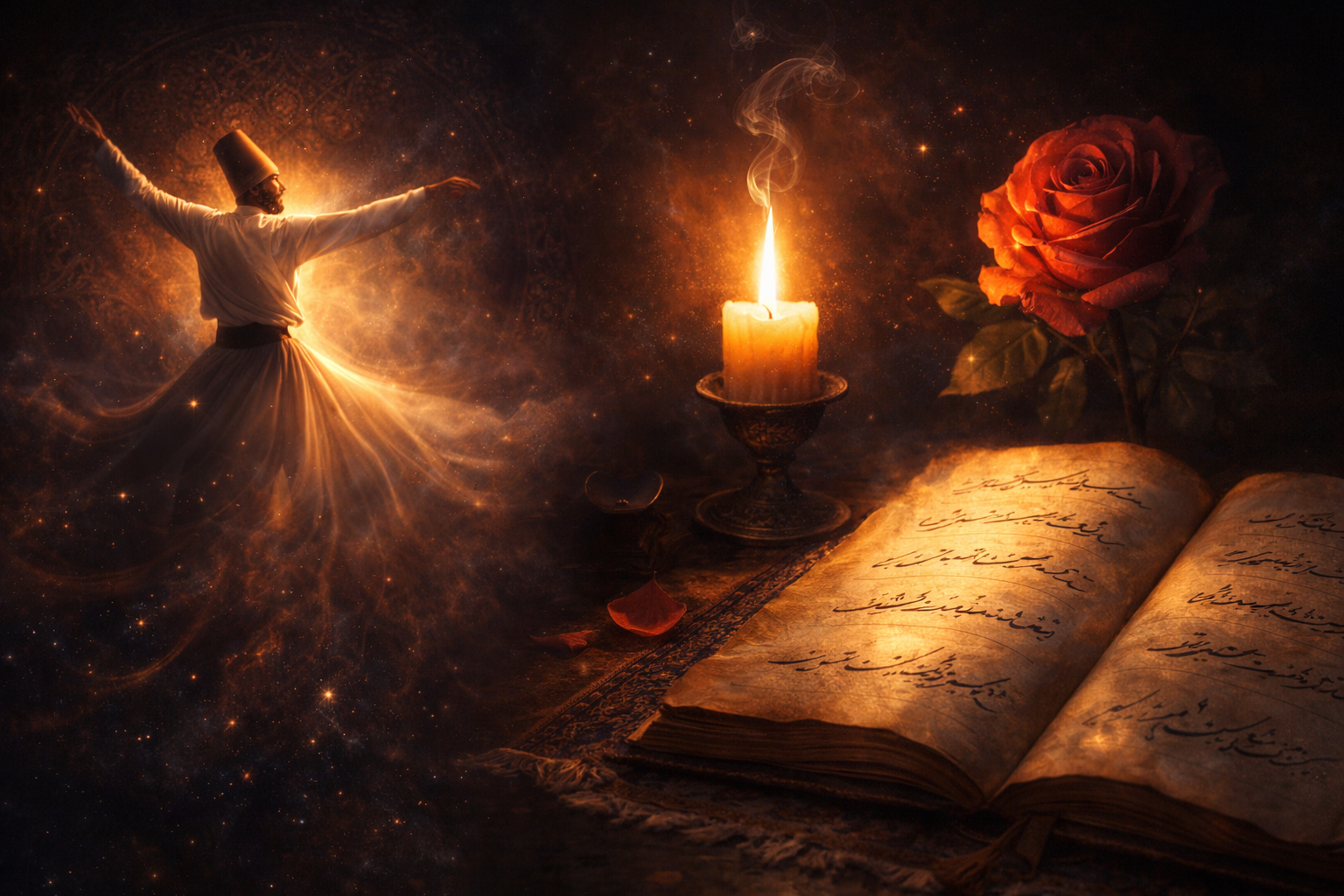
Rumi’s poetry is rich with symbolism. Every word, image, and metaphor conveys layers of spiritual meaning. Understanding the symbols in Rumi’s work allows readers to access his teachings on love, unity, self-discovery, and divine connection more deeply. This article explores the key symbols Rumi uses and what they represent.
1. The Rose
The rose is one of the most frequent symbols in Rumi’s poetry.
- Meaning: The rose often represents divine love, beauty, and spiritual awakening.
- Context: Just as a rose blooms gradually, spiritual understanding develops over time.
- Example:
“The rose’s fragrance is the echo of love from the unseen.”
This line conveys that beauty and love come from a higher, often invisible source.
Application: Recognizing love and beauty in everyday life can be a spiritual practice.
2. The Candle
The candle symbolizes illumination, guidance, and inner light.
- Meaning: The candle’s light represents knowledge, awareness, and the soul’s connection to the divine.
- Context: In dark places, a candle provides direction and hope. Similarly, spiritual insight guides the soul.
- Example:
“Be like a candle. Burn yourself to light the path for others.”
Application: Practicing selflessness and sharing wisdom reflects the candle’s symbolism in life.
3. Wine and the Tavern
Rumi frequently uses wine and the tavern as spiritual metaphors.
- Meaning: Wine symbolizes divine ecstasy, spiritual awakening, and joy that transcends ordinary life.
- Tavern: Represents a place of surrender, where worldly attachments are set aside to experience divine love.
- Example:
“Come, come, whoever you are. Drink from the cup that frees the soul.”
Application: Embracing moments of surrender and joy can connect individuals to higher awareness.
4. The Journey
The journey is a central metaphor in Rumi’s writings.
- Meaning: Life is a journey toward understanding, love, and unity with the divine.
- Stages: Challenges, growth, and discovery are all steps along this path.
- Example:
“Travel your path with an open heart; every step brings you closer to the Beloved.”
Application: Viewing life as a journey allows one to accept hardships, celebrate growth, and remain committed to personal and spiritual development.
5. The Ocean and the Drop
Rumi often contrasts the individual with the universe.
- Meaning: The drop represents the individual; the ocean represents the infinite, the divine, or universal consciousness.
- Example:
“You are not a drop in the ocean. You are the entire ocean in a drop.” - Lesson: Each person contains the essence of the divine and reflects the greater whole.
Application: This symbol encourages self-awareness and recognition of interconnectedness with all beings.
6. Light and Darkness
Rumi uses light and darkness to illustrate spiritual states.
- Light: Awareness, knowledge, divine love, and clarity.
- Darkness: Ignorance, attachment, or spiritual unawareness.
- Example:
“The wound is the place where the Light enters you.” - Lesson: Pain and struggle can lead to spiritual illumination if approached consciously.
7. Applying Symbolism in Daily Life
Understanding Rumi’s symbols is not just academic; it can guide personal growth.
- Recognize Metaphors – Identify symbols like light, roses, or the journey in your experiences.
- Reflect on Meanings – Contemplate how these metaphors relate to your life and challenges.
- Practice Lessons – Implement Rumi’s teachings symbolically, such as cultivating inner light or embracing the journey.
Conclusion
Symbolism in Rumi’s poetry provides a bridge between words and spiritual insight. Roses, candles, wine, journeys, and oceans are more than literary devices; they guide readers toward self-discovery, love, and unity with the divine.
By exploring these symbols, readers can uncover practical lessons for inner growth, relationships, and understanding the deeper currents of life.
About the Author