
This article explains a step by step gym training guide for new gym members. It covers how to start training, how to use gym equipment, how to structure workouts, how to progress, and how to manage recovery and nutrition.
Many new gym members struggle at the beginning because they do not follow a clear system. Gym training works best when actions are simple, repeated, and tracked over time. This guide removes confusion and gives a direct path for starting gym training.
Step 1: Understand Gym Training Purpose
Gym training is used for:
- Strength development
- Muscle growth
- Fat reduction
- Movement improvement
- Health maintenance
A new gym member should focus on learning movement patterns before increasing load.
Step 2: Learn Basic Movement Patterns
All gym exercises are based on movement patterns.
Push movement
Examples:
- Bench press
- Shoulder press
- Push-ups
Pull movement
Examples:
- Lat pulldown
- Row
- Pull-up
Squat movement
Examples:
- Squat
- Leg press
Hinge movement
Examples:
- Deadlift
- Romanian deadlift
Core movement
Examples:
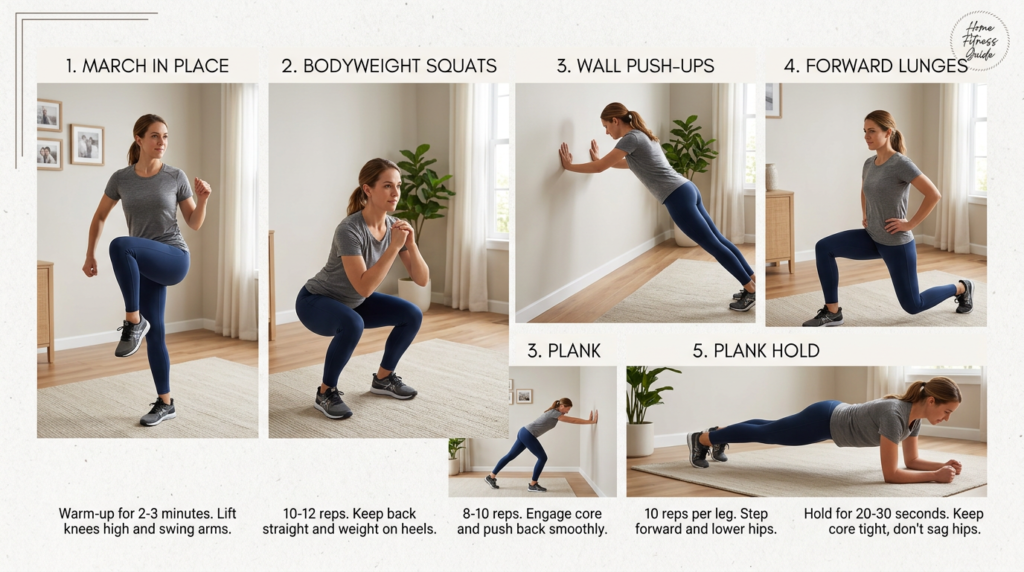
- Plank
- Leg raise
Training all patterns builds balanced strength.
Step 3: Start With Simple Weekly Schedule
New gym members should train 3 days per week.
Weekly plan
- Monday: Full body workout
- Wednesday: Full body workout
- Friday: Full body workout
Rest days are used for recovery.
Step 4: Full Body Workout Plan
Each session includes all major muscle groups.
Workout A
- Squat
- 3 sets × 8–10 reps
- Bench press
- 3 sets × 8–10 reps
- Lat pulldown
- 3 sets × 10–12 reps
- Shoulder press
- 2–3 sets × 8–12 reps
- Plank
- 3 sets × 30–60 seconds
Workout B
- Leg press
- 3 sets × 10–12 reps
- Dumbbell chest press
- 3 sets × 8–10 reps
- Seated row
- 3 sets × 10–12 reps
- Romanian deadlift
- 3 sets × 8–10 reps
- Crunch
- 3 sets × 10–15 reps
Step 5: Learn Proper Form First
Form is required before increasing weight.
Rules:
- Move through full range
- Keep control during repetition
- Avoid fast uncontrolled movement
- Start with light load
Form reduces risk of injury and improves training quality.
Step 6: Warm-Up Before Every Session
Warm-up prepares body for exercise.
Warm-up steps
- 5 to 10 minutes walking or cycling
- Joint movement exercises
- Light set of first exercise
Example:
- Squat with light weight before working sets
Step 7: Rest Between Sets
Rest time depends on exercise type.
- Large exercises: 90–180 seconds
- Medium exercises: 60–90 seconds
- Core exercises: 30–60 seconds
Rest allows performance to stay consistent.
Step 8: Progression Method
Progression means increasing training load over time.
Method
- Start with weight that allows full reps
- When top reps are completed, increase weight
- Increase gradually
Example
- Week 1: squat 40 kg × 8
- Week 2: 40 kg × 9
- Week 3: 40 kg × 10
- Week 4: 42.5 kg × 8
Step 9: Add Cardio for Fitness
Cardio supports heart health and energy use.
Options:
- Walking
- Cycling
- Rowing machine
Weekly target
- 2 to 3 sessions
- 20 to 30 minutes per session
Step 10: Recovery Plan
Recovery is part of training.
Sleep
- 7 to 9 hours per night
Rest days
- At least 2 rest days per week
Light activity
- Walking
- Stretching
Step 11: Nutrition Basics
Food supports training results.
Protein
Supports muscle repair.
Sources:
- Chicken
- Eggs
- Fish
- Beans
Carbohydrates
Provide energy for training.
Sources:
- Rice
- Oats
- Potatoes
- Fruits
Fats
Support body function.
Sources:
- Nuts
- Olive oil
- Seeds
Water
- 2 to 3 liters per day
Step 12: Track Training Progress
Tracking helps measure improvement.
Methods
- Weight lifted
- Repetitions completed
- Body weight
- Training log
Example log
- Squat: 50 kg × 10, 10, 9
- Bench press: 40 kg × 10, 9, 8
- Row: 45 kg × 12, 10, 10
Step 13: Avoid Common Mistakes
Skipping training days
Consistency is required.
Increasing weight too early
Form must be stable first.
Ignoring rest
Recovery supports progress.
No tracking
Progress cannot be measured without records.
Step 14: Weekly Structure Example
Monday
Full body A
Wednesday
Full body B
Friday
Full body A
Next week alternates.
Step 15: Long-Term Training Path
After 8 to 12 weeks:
- Increase training volume
- Add new exercises
- Adjust weight progression
- Move to split training program